



Overview
- Miniature circuit breakers (MCBs) protect electrical systems by automatically interrupting overloads and short circuits without requiring replacement.
- Selecting the right MCB in the Philippines involves matching tripping curves (Types B, C, D, K, Z), pole counts (1P to 4P), and interrupting capacities (6 kAIC or 10 kAIC), with Meiji Electric offering compliant solutions.
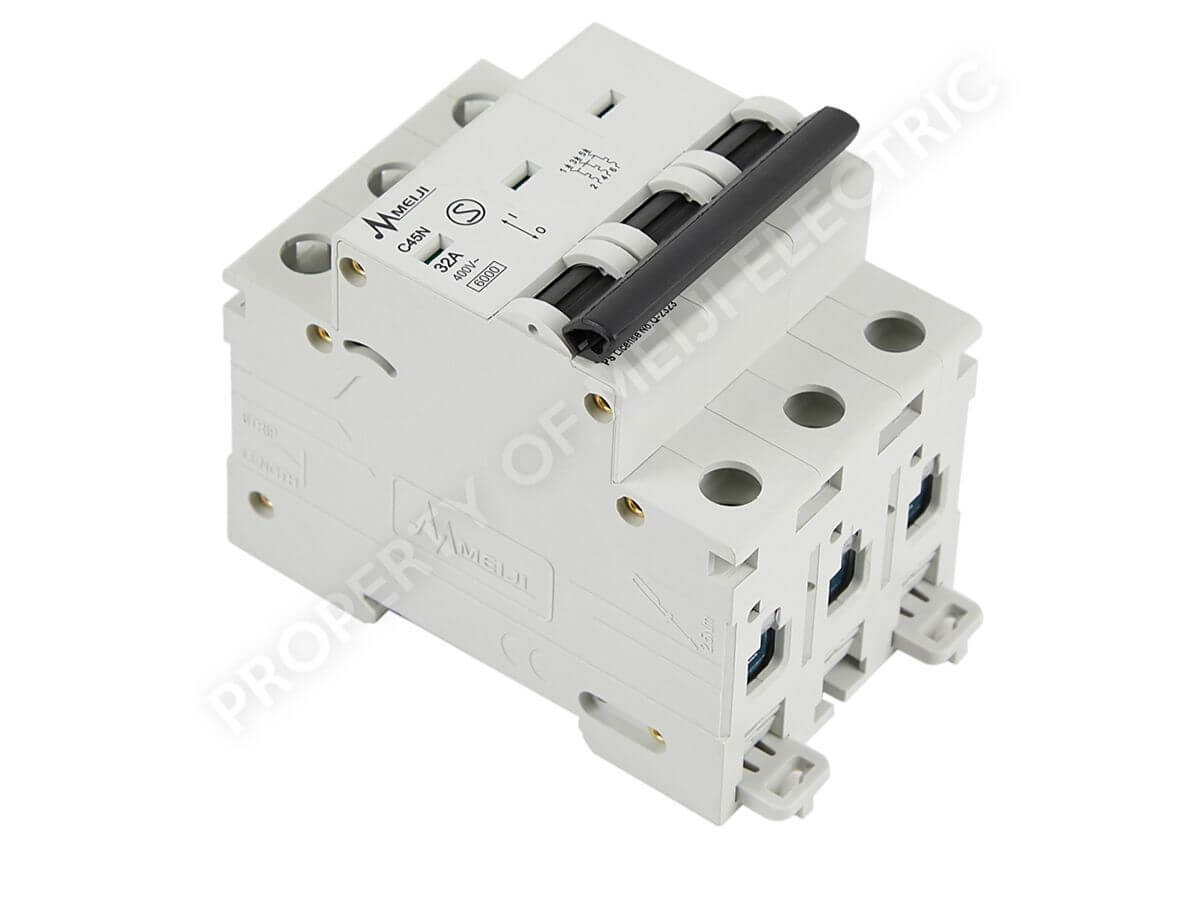
A miniature circuit breaker (MCB) is a resettable safety device that automatically stops the flow of electricity when it detects too much current or a short circuit. Unlike traditional fuses, MCBs do not need replacement after an electrical fault. Once the cause is identified and fixed, the breaker can be switched back on.
MCBs use two mechanisms to detect electrical problems. One responds to excessive current flowing through a circuit over time, while the other reacts quickly to sudden current spikes caused by short circuits.
Understanding the different types of miniature circuit breakers in the Philippines is essential to ensuring that each electrical circuit has the right protection. Selecting the wrong type may cause the breaker to switch off whenever an appliance draws more electricity during start-up.
Classification by Tripping Curve (Trip Types)
A tripping curve specifies how quickly a miniature circuit breaker (MCB) trips at a given current level. Selecting the right curve for your equipment prevents unnecessary power interruptions whilst ensuring dependable fault protection.
- Type B MCB For residential lighting and general-purpose outlets, a breaker with a lower trip threshold is usually sufficient. Type B MCBs trip at 3–5 times their rated current, making them suitable for circuits with low starting current requirements.
- Type C MCB Some electrical equipment draws more current when first switched on than during regular operation. Type C breakers account for this difference, tripping at 5–10 times their rated current. They are commonly used for commercial lighting systems and small motors.
- Type D MCB When a circuit supplies heavy equipment such as transformers, welding machines, or large motors, expect higher starting current requirements. Type D MCBs accommodate these temporary increases with a trip threshold of 10–20 times their rated current.
- Type K MCB Some motor-driven equipment needs a higher starting current but may not require the same level as larger industrial equipment. Type K MCBs typically trip at around 8–12 times their rated current, although the exact range varies by manufacturer, and are suited to certain motor applications.
- Type Z MCB For circuits supplying sensitive electronic equipment, a lower trip threshold may be necessary. Type Z MCBs trip at 2–3 times their rated current, making them suitable for applications that require protection against small current increases.
Classification by Number of Poles
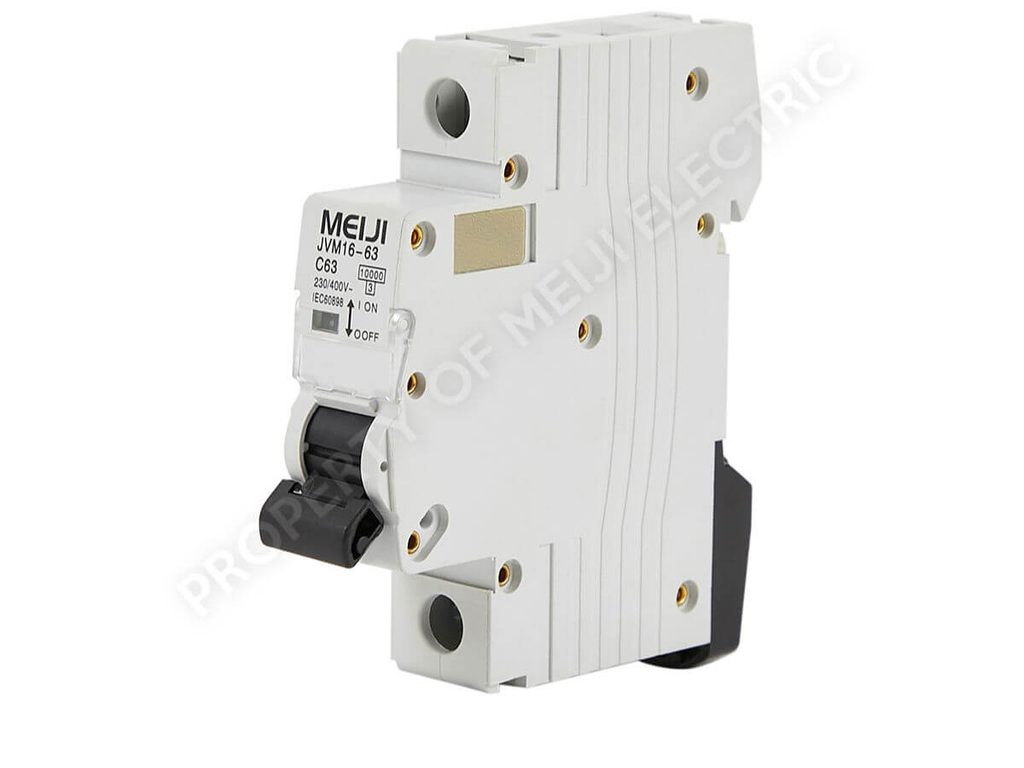
Aside from the tripping curve, the number of poles is another factor to consider when selecting an MCB. Pole count refers to the number of electrical conductors a breaker can switch off at the same time. The right configuration depends on the electrical supply type and the circuit being protected. Meiji Electric offers a variety of pole configurations to accommodate different electrical systems and protection requirements. These include the following:
- Single-Pole (1P) Often used in single-phase installations, this breaker protects individual lighting circuits, general-purpose outlets, and other circuits by disconnecting one live conductor when a fault occurs.
- Double-Pole / Two-Pole (2P) When both live and neutral conductors need to be disconnected, a double-pole MCB switches off the two wires simultaneously. This configuration is commonly used for high-load appliances such as air conditioners and washing machines.
- Triple-Pole / Three-Pole (3P) & Four-Pole (4P) When both live and neutral conductors need to be disconnected, a double-pole MCB switches off the two wires simultaneously. This configuration is commonly used for high-load appliances such as air conditioners and washing machines.
Classification by Interrupting Capacity (kAIC)
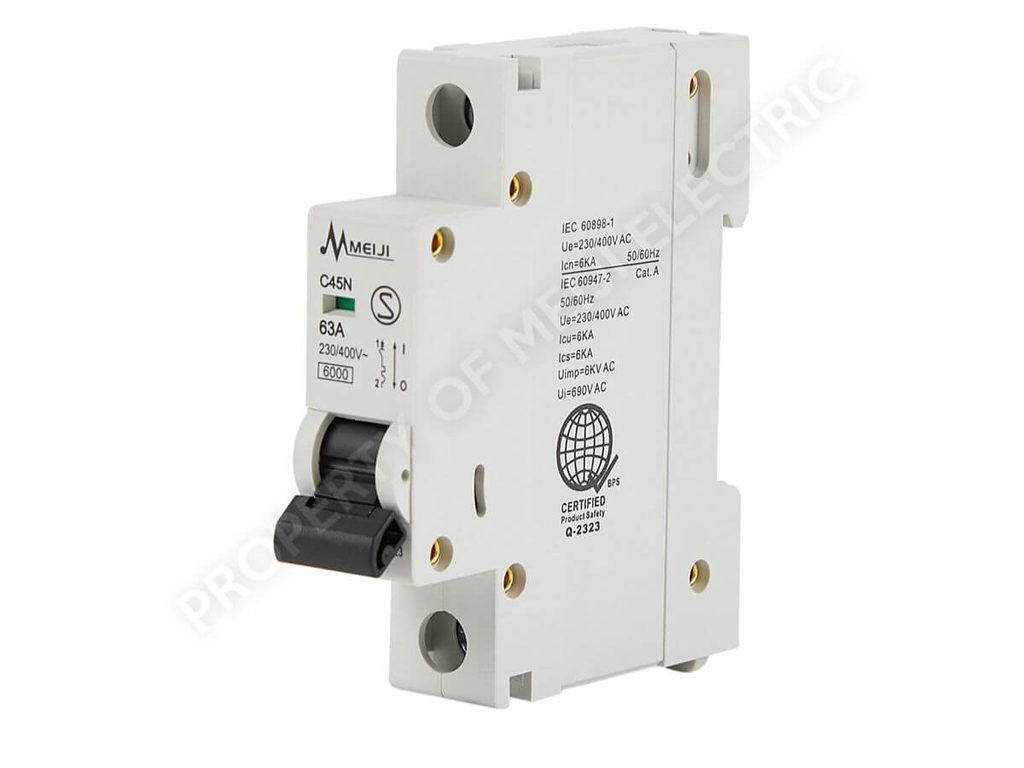
Measured in kiloamperes (kA), interrupting capacity indicates the highest fault current an MCB can safely disconnect without failing, welding its contacts, or triggering an electrical fire. Philippine installations typically require 6 kAIC for residential and light commercial setups and 10 kAIC for heavy commercial and industrial applications.
- 6 kAIC With an interrupting capacity of 6,000 amperes, these breakers are commonly used in residential properties, small offices, and light commercial spaces where the available fault current does not exceed their rating. Meiji’s C45N Series (1–63A) offers this rating for regular electrical applications.
- 10 kAIC Commercial buildings, industrial facilities, and installations with potentially higher fault currents may require breakers rated at 10,000 amperes. Meiji’s VM16 Series (1–63A) provides this rating for sensitive loads that require higher interrupting capacity, while the NC100H Series (80–125A) suits heavy-duty applications.
Why Choose Meiji for Your Miniature Circuit Breaker Needs
Meiji Electric delivers reliable circuit protection through a versatile range of 1-pole, 2-pole, and 3-pole miniature circuit breakers built to strict safety and quality standards. Sourcing your MCBs alongside Meiji panelboards, wiring devices, and transfer switches streamlines procurement whilst ensuring full system compatibility.
Always consult a licensed electrical engineer or electrician before purchase and installation to confirm that your chosen breaker matches your circuit specifications and complies with local electrical safety codes.
Key Takeaway
Choosing among the different types of miniature circuit breakers in the Philippines requires more than comparing ratings and features. The right MCB must match the electrical system it protects, considering factors such as the circuit’s normal operating current, the starting current of connected equipment, the number of conductors to disconnect, and the maximum fault current the breaker must safely interrupt.
A mismatch may result in unnecessary power interruptions or inadequate protection during an electrical fault. Prioritizing safety means looking beyond the product specifications and considering how each breaker performs within the entire installation.
Prioritize safety and quality by exploring Meiji Electric’s MCB range. Contact us now!
No comment yet, add your voice below!