



Overview
- Single-pole and two-way switches differ in wiring, terminals, and control locations. Single-pole switches use two terminals to operate lights from one spot, ideal for bedrooms.
- Two-way switches use three terminals and traveler wires for dual-location control in hallways or staircases, with Meiji Electric offering durable, stylish options for both setups.
Most light switches look similar on the outside, making it easy to assume that they all work the same way. However, their internal mechanisms and wiring arrangements determine how they control lighting fixtures and whether you can operate a light from one or multiple locations.
When renovating your home or working on a residential project, consider how lighting needs to function in each space. You may want to control a hallway light from both ends, while a bedroom may only need a switch near the entrance. These requirements clarify the difference between single-pole and two-way light switches and help you choose the right switch for each application.
Single-Pole Switch
A single-pole switch controls a light fixture from one location, such as beside a bedroom door, using two current-carrying terminals: COM (Common) and L1 (Line 1). The COM terminal receives the incoming live wire from the power supply, while L1 connects to the wire leading to the light fixture. Flipping the switch ON joins an internal metal contact between COM and L1 to complete the circuit, whilst flipping it OFF separates the contact to break the current.
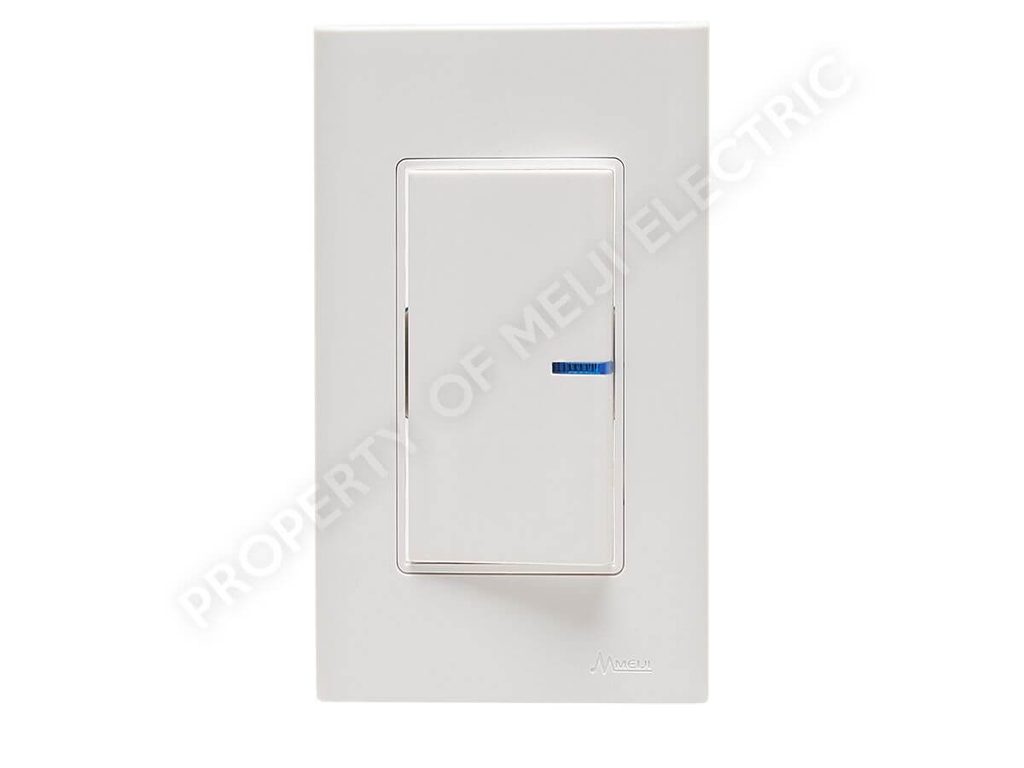
For single-location rooms like bedrooms, Meiji’s One Gang One Way Switch (MCS-0121) from the Meiji Classic Series offers reliable performance. Made from durable polycarbonate that preserves its pure white finish, its clean design complements classic, rustic, and country-style interiors.
Two-Way Switch
A two-way switch allows you to turn a single light fixture on or off from two different access points, making it ideal for staircases, long hallways, and large rooms with multiple entrances.
- Terminal Layout: Each two-way (three-way) switch contains a COM (Common) terminal, two traveler terminals (L1 and L2), and typically a separate ground terminal.
- Wiring Arrangement: The incoming live wire connects to the COM terminal on the first switch, whilst the wire running to the light connects to the COM terminal on the second switch. Two traveler wires link L1 and L2 between the switches.
- Switching Action: Flipping a switch shifts the current between the two traveler paths. When both switches connect to the same path, the circuit completes and the light turns on; flipping either switch shifts the path, interrupts the circuit, and switches the light off.
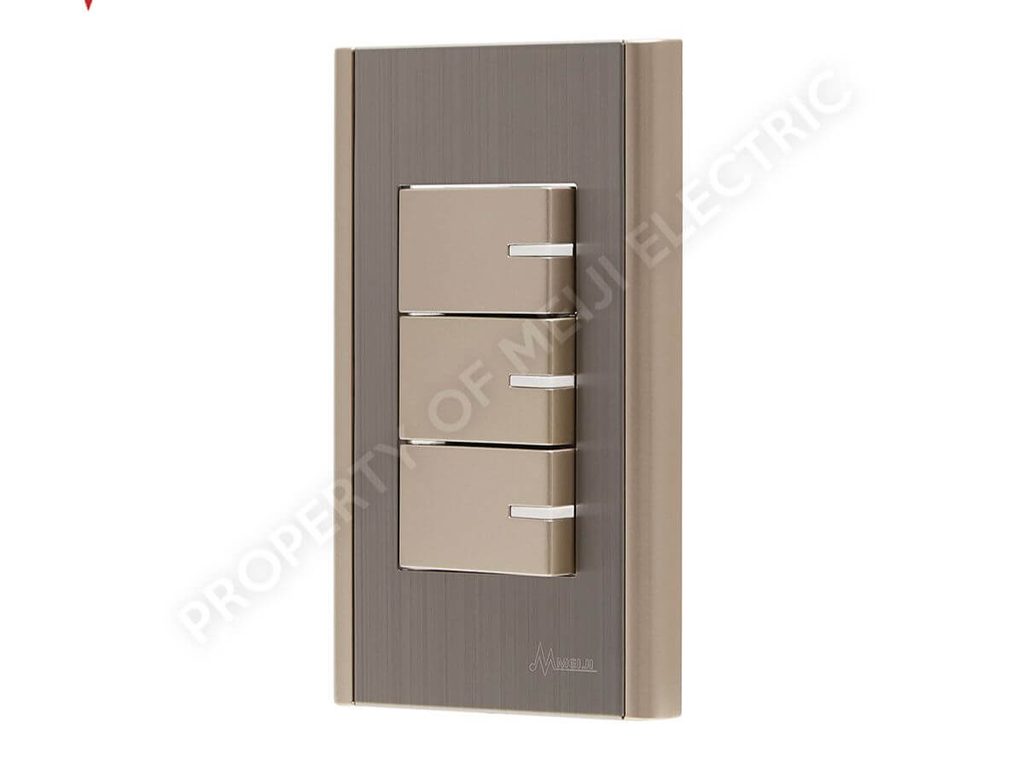
To equip staircases or hallways, consider Meiji’s Three Gang Three Way Switch Wide Touch from the Champagne Series. Featuring a durable stainless steel plate in Black, Silver, or Gold, it pairs reliable multi-location control with a sleek finish suited to modern renovations.
Key Differences of Single-pole Switch and Two-way Switch
Single-pole and two-way switches differ in their control locations, terminal connections, and wiring requirements. These differences determine how each switch operates and which areas of your home suit its use. The table below compares their key features to help you choose the appropriate switch for your lighting setup.
| Feature | Single-Pole Switch | Two-Way Switch |
|---|---|---|
| Control Locations | Controls a light from one location. | Allows a light to be controlled from two separate locations using a pair of switches. |
| Terminals | Has two terminals: Common and L1. | Has three terminals: Common, L1, and L2. |
| Wiring Complexity | Uses a simple wiring setup that opens or closes the live circuit. | Requires additional traveler wires to connect the two switches and enable control from either location. |
| Common Applications | Suitable for bedrooms, small rooms, and areas with a single access point. | Ideal for staircases, hallways, and larger rooms with multiple entrances. |
What Makes Meiji Electric a Reliable Choice for Electrical Switches
Electrical switches are among the most frequently used components in a home’s electrical system, making safety and dependable performance essential. With 45 years of industry experience since 1981, we at Meiji Electric remain committed to providing quality wiring devices that meet the needs of residential spaces.
Our commitment to safety guides our approach to product quality, material selection, and construction. We develop electrical switches with reliable performance and practical designs suited to different lighting requirements. Our range includes one-way and three-way switches that provide appropriate lighting control for different areas of your home. With functional features and finishes that complement various interior styles, we help make your home’s electrical setup both dependable and visually cohesive.
Key Takeaway
The difference between single-pole and two-way light switches affects how you move through and interact with your home. A single-pole switch provides straightforward lighting control from one location, while a two-way switch adds convenience by allowing you to operate the same light from two separate points. Place these switches based on how each room is accessed and used, so you can control your lighting whenever you need it.
Contact us to explore our range of quality switches and find reliable options that meet your home’s lighting needs while complementing your interior design.
No comment yet, add your voice below!